The thrill of cracking a crossword puzzle is undeniable. That moment when a complex clue finally clicks, and the letters fall perfectly into place, is pure satisfaction. But some clues, particularly those delving into the intricacies of specific fields like botany, can be real head-scratchers. One such perennial poser that frequently challenges even seasoned solvers is the Pollen Bearing Plant Part Crossword clue. This seemingly straightforward request often leads to a dilemma, primarily because of two highly plausible, six-letter answers: ANTHER and STAMEN.
If you've ever stared blankly at your puzzle, wrestling with whether to fill in ANTHER or STAMEN, you're not alone. The Times Concise puzzle on March 9, 2026, for instance, featured "Pollen-bearing plant part," with ANTHER noted as a 98% match. But what exactly are these plant parts, how do they relate, and what strategies can you employ to solve this common crossword conundrum with confidence? This article dives deep into the botanical facts and offers practical crossword-solving tips to ensure you're never stumped by this clue again.
Decoding the Pollen-Bearing Plant Part: ANTHER vs. STAMEN
To truly master the Pollen Bearing Plant Part Crossword, we must first understand the botanical distinctions between ANTHER and STAMEN. While both are integral to a flower's male reproductive system and directly involved with pollen, they represent different levels of a plant's anatomy.
The ANTHER: The Pollen Powerhouse
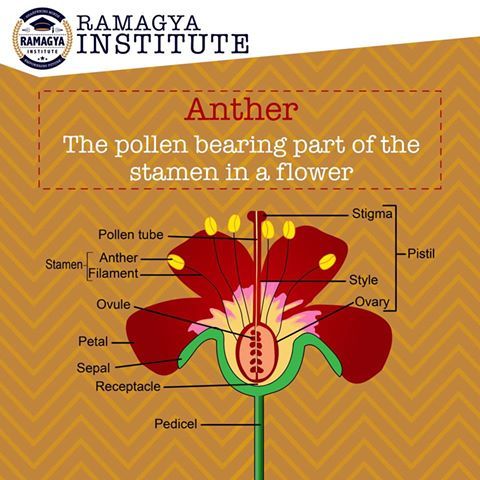
The ANTHER is a highly specialized component of a flower's male reproductive organ. Its primary role is to produce and contain pollen. Visually, anthers are often small, sac-like structures, typically yellow or brown, found at the tip of a slender stalk. When mature, the anther dehisces (splits open) to release its precious cargo of pollen grains, which are then ready for transfer to the stigma of another flower (or the same flower, in some cases) for fertilization.
From a crossword perspective, ANTHER is a fantastic answer. It's a six-letter word, botanically precise, and directly responsible for bearing pollen. Its specificity makes it a frequent target for setters looking for a clear-cut term for the 'pollen-bearing' function.
The STAMEN: The Male Reproductive Organ, Whole and Complete
The STAMEN, on the other hand, refers to the entire male reproductive organ of a flower. It's a broader term that encompasses more than just the pollen-producing part. A typical stamen consists of two main components:
- The Anther: As described above, this is where the pollen is produced and stored.
- The Filament: This is the slender stalk that supports the anther, holding it in a position that facilitates pollen dispersal.
So, while the anther is the *part* that literally bears the pollen, the stamen is the *entire structure* responsible for the male reproductive function, which inherently includes bearing pollen. This is why both ANTHER and STAMEN are valid answers to the "Pollen-bearing plant part" clue, leading to the common crossword dilemma. Understanding their hierarchical relationship is key: the anther is part of the stamen. For a more detailed breakdown, you might find our article Pollen-Bearing Plant Parts: ANTHER vs. STAMEN Explained particularly insightful.
Why "Pollen Bearing Plant Part Crossword" Clues Trip Up Solvers
The primary reason this particular Pollen Bearing Plant Part Crossword clue is so tricky lies in the ambiguity of natural language and the precision required in crosswords. Both ANTHER and STAMEN are six letters long and perfectly fit the description of a "pollen-bearing plant part."
- If you consider the most direct interpretation – "the part that *holds* the pollen" – ANTHER is the immediate, most precise answer.
- If you interpret it as "the part of the plant that *is responsible for* bearing pollen" or "the *overall structure* involved," then STAMEN is equally valid.
This linguistic overlap creates a situation where a solver might confidently write down one answer, only to find it clashes with intersecting letters from other clues. Without additional context, it's a 50/50 guess, which is frustrating in a game built on logic and deduction. This is why experienced crossword enthusiasts know to hold off on filling in such ambiguous clues until they have more letters from crossing words.
Mastering Botanical Crosswords: Tips for "Pollen Bearing Plant Part Crossword" and Beyond
Don't let botanical clues intimidate you. With the right approach, you can conquer any Pollen Bearing Plant Part Crossword and expand your vocabulary in the process.
General Crossword-Solving Strategies
Before tackling specific botanical terms, let's review some foundational crossword techniques:
- Letter Count is King: Always start by noting the number of letters. This immediately narrows down possibilities. For "Pollen-bearing plant part," the six-letter count is critical, pointing directly to ANTHER or STAMEN.
- Intersecting Letters are Your Lifeline: The golden rule of crosswords! Never guess on a difficult clue if you can wait for intersecting letters from easier clues. If you have, say, an 'A' in the first position, it's clearly ANTHER. If a 'T' is the third letter, it's ANTHER. If an 'M' is the third letter, it's STAMEN.
- Consider Synonyms and Related Terms: Crossword setters love to use synonyms or slightly different phrasings. Be prepared for variations like "Male flower part" (could be STAMEN) or "Pollen sac" (ANTHER).
- Difficulty and Publisher: Some puzzles (like the Times Concise mentioned in our reference) might lean towards more common or direct answers. More obscure puzzles might opt for less obvious terms.
- Use a Pencil! A simple tip, but vital for making corrections.
Specific Tactics for Pollen-Related Clues
When faced with the "Pollen-bearing plant part" clue and its six-letter constraint, here's how to decide between ANTHER and STAMEN:
- The Power of Position:
- If your intersecting letters reveal the first letter is A, it's ANTHER.
- If the first letter is S, it's STAMEN.
- If the third letter is T, it's ANTHER.
- If the third letter is A or M, it's STAMEN (S-T-A-M-E-N).
- Clue Nuance (if any): While rare for this specific clue, sometimes other clues might hint at a broader or more specific meaning. If a related clue is "Filament partner," it's leaning towards ANTHER as part of a pair. If it's "Male floral organ," it's certainly STAMEN.
- Database Cross-Referencing: If all else fails and you're truly stuck, online crossword clue databases can be invaluable. However, use them as a learning tool to understand *why* an answer fits, rather than just copying.
Beyond Anther & Stamen: Other Botanical Terms to Know
Broadening your botanical vocabulary will serve you well in future crosswords. Here are a few other common terms related to flowers:
- Pistil / Carpel: The female reproductive part of a flower.
- Ovary: Contains the ovules, which develop into seeds.
- Stigma: The receptive tip of the carpel, where pollen lands.
- Style: The stalk connecting the stigma to the ovary.
- Petal: The often brightly colored parts of a flower that attract pollinators.
- Sepal: The leaf-like structures that enclose the bud before it opens.
The world of plants is a fertile ground for crossword clues, offering a rich tapestry of terminology for setters to draw upon. By familiarizing yourself with these key terms and understanding their anatomical relationships, you'll be well-equipped to tackle any botanical challenge a crossword throws your way.
Conclusion
The "Pollen-bearing plant part" crossword clue is a classic for a reason. It perfectly encapsulates the challenge and reward of word puzzles, forcing us to delve into specific knowledge while also employing logical deduction. By understanding the distinct yet related roles of the ANTHER (the pollen-producing part) and the STAMEN (the entire male reproductive organ, including the anther), you can approach this clue with newfound confidence. Remember to leverage letter counts and intersecting words as your primary tools. With these strategies in hand, you're not just solving a Pollen Bearing Plant Part Crossword; you're expanding your knowledge, honing your critical thinking skills, and enjoying the timeless pleasure of a well-solved puzzle. Happy puzzling!